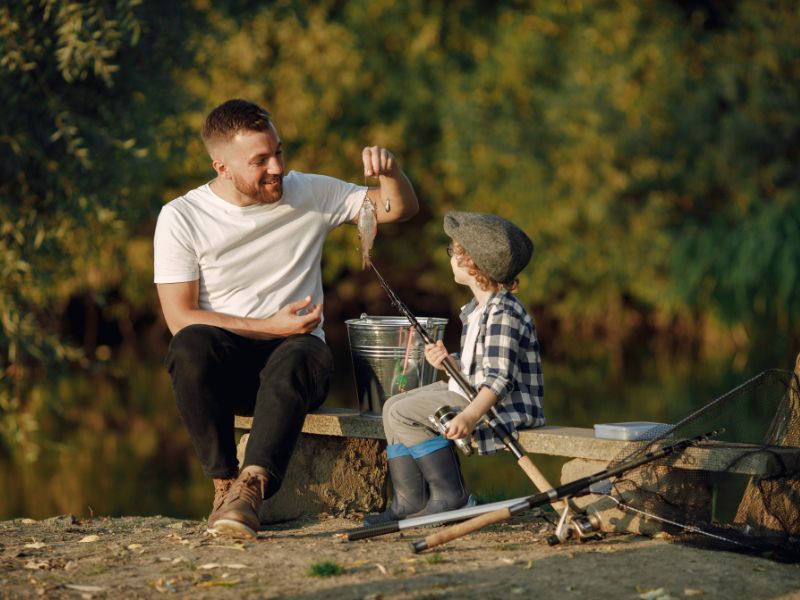
Fishing is one of the most relaxing and rewarding outdoor activities people can enjoy. Whether standing on the bank of the lake, casting from a dock, or sitting in a boat on a calm morning, fishing offers a chance to connect with nature and spend quality time outdoors. For beginners, however, fishing can seem intimidating at first. With unfamiliar equipment, techniques, and terminology, many people aren’t sure where to start. Teaching beginners how to fish doesn’t have to be complicated. With a few basic steps, anyone can learn basics and begin enjoying this timeless activity of fishing!
Start with the Basics of Fishing Equipment for Beginners
The first step in teaching someone how to fish is introducing the essential equipment. Fortunately, beginners do not need expensive gear to get started. A simple spincasting rod and reel combo is usually the best choice for new anglers. These setups are affordable, easy to use, and widely available at sporting goods stores. My favorite for beginners is a Zebco 33 combo. If you want a little less expensive combo start with a Zebco Slingshot or Splash combo. Wal-Mart, Academy, Bass Pro or Amazon are great places to shop for these. Pro shopping tip: Walmart often Clearances out their rods and reels in Febuary. On a recent trip to Florida we purchased over 200 Zebco Combos and Penn Reels at great prices.
In addition to a rod and reel, beginners will need a few basic items:
- Fishing line (Zebco combos come pre-lined)
- Hooks – I like a Longshank hooks for Panfishing – it gives me a little handle to hold to unhook them. Mustad 3261D Classic Cricket 4 Extra Long Hook
- Sinkers (small weights) split shots work great for beginners
- Bobbers or floats – I like weighted Torpedo float bobbers or Balsa Pencil spring bobbers
- Bait or lures – I love using red wigglers and nightcrawler worms to start with, then crickets and mealworms. After they master these they can try lures.
- A small tackle box – this is handy as you start gathering fishing hooks, bobbers, weights and other fishing related things. Really any kind of box or container with a lid will work to begin with.
Keeping equipment simple helps beginners focus on learning the process rather than feeling overwhelmed by complicated gear.
How to Set Up a Fishing Rod: Step-by-Step Guide for Beginners
Once the equipment is ready, the next step is showing beginners how to assemble their fishing setup. This includes threading the fishing line through the guides on the rod, tying a hook onto the line, attaching a bobber if needed, and adding bait.
One of the most useful skills for new anglers is learning a basic fishing knot, such as the improved clinch knot or Palomar. These knots are reliable, easy to learn, and commonly used for attaching hooks and lures. Practicing knot tying a few times before heading out to fish can help beginners feel more confident.
Beginner Casting Techniques: How to Cast a Fishing Rod Properly
Casting is one of the most exciting parts of fishing, but it can take a little practice. Beginners should start with simple, controlled casts rather than trying to throw the line as far as possible.
A basic casting technique involves:
- Holding the rod with a firm grip.
- Pressing the release button on the reel (if using a spincast reel).
- Find the spot you want to cast to.
- Bring the rod back to around 11 o’clock over your head.
- Swing the rod forward smoothly and release the button at around 2’Clock.
This will release the line and should land your bait where you are aiming for.
This may take a little practice but you will learn it quickly
Encourage beginners to practice casting in an open area first, such as a backyard or park. This helps them develop coordination before fishing in tighter spaces near water.
Best Fishing Locations for Beginners: Where to Start Fishing
Location plays a major role in the success of beginner anglers. Quiet ponds, small lakes, and slow-moving rivers are ideal places to start. These areas often have fish and have accessible fishing spots along the shoreline.
Fishing piers and public docks can also be excellent choices. They provide easy access to deeper water and usually offer enough space for beginners to cast safely.
When teaching beginners, it’s helpful to know that fish are often found near structures such as rocks, weeds, logs, and shaded areas. These spots provide food and shelter for fish.
Learning Patience in Fishing: Tips for Beginner Anglers
I always try to get new fishermen on a good spot with lots of active feeding fish.
Catching fish on their first few trips helps them get an appreciation for the sport. Fishing does require patience sometimes, and this is an important lesson for beginners. Sometimes fish bite quickly, while other times it may take a while. Teaching beginners to enjoy the experience rather than focusing only on catching fish can make the activity much more enjoyable.
Encourage them to observe their surroundings, the movement of the water, the sounds of birds, and the calmness of the environment. Fishing can be just as much about relaxation and appreciation of nature as it is about catching fish.
How to Reel in a Fish: A Beginner’s Guide
When a fish bites, beginners often feel a sudden pull or see the bobber go underwater. This is the moment when excitement kicks in.
Teach beginners that when the bobber starts moving or goes under, reel in all the line until you reach the bobber then swiftly lift the rod tip to set the hook, once the hook is set and the fish is on the line steadily reel in the line while keeping tension on it. The key is to avoid pulling too hard, which could break the line or cause the fish to escape.
Once the fish is close enough, it can be carefully lifted from the water or guided into the net.
Fishing Safety Tips and Conservation Practices for Beginners
Safety and responsibility are essential parts of fishing. Beginners should learn to handle hooks carefully, watch their surroundings when casting, and follow local fishing regulations.
It’s also important to introduce the concept of conservation. Many anglers practice catch-and-release fishing, which helps protect fish populations and maintain healthy ecosystems.
Teaching beginners to respect wildlife and the environment ensures that future generations can continue to enjoy fishing.
Why Fishing is a Lifelong Skill and Outdoor Passion
Fishing is more than just a hobby—it’s a skill that can bring people closer to nature and create lasting memories. By starting with simple equipment, practicing basic techniques, and choosing beginner-friendly locations, anyone can learn how to fish.
For many people, their first fishing trip sparks a lifelong love of the outdoors. With patience, practice, and guidance, beginners can quickly gain confidence and discover the joy that fishing has offered generations of anglers. My grandfathers both loved to fish and I learned to love fishing at a young age. By 5 years old my grandfathers and dad would took me fishing a good bit. My dad loved fishing when he was young but when were young he didn’t fish much because he was busy helping us fish. My grandfathers continued to fish their whole lives. I have learned how rewarding the sport of fishing is and have traveled all over including Alaska several times, Brazil and Guyana. South Florida is one of my favorite freshwater and saltwater fisheries. For more of my fishing stories and adventures read some of my other articles.
YouTube @TakeMeFishingGary
You can reach me at TakeMeFishingGary.com
Just fill out the Contact Form
Please Remember, If You Are Not Going To Eat It, Don’t Kill It!
“Tight Lines and Squealin’ Reels Put A SMILE On My Face Every Time!”
Gary Turner
